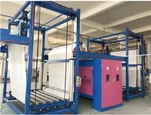

In the textile industry, singeing remains a critical process for enhancing fabric quality by removing surface fibers through controlled combustion. Central to this operation is burner, which have undergone significant technological advancements to optimize efficiency, safety, and sustainability.
Traditional singeing systems relied on simple gas-fired burners with limited flame control, often leading to uneven treatment or excessive energy consumption. However, modern iterations incorporate precision-engineered singeing burner with optimized air-gas mixing ratios. Innovations such as staged combustion and preheated air injection now enable uniform flame distribution, critical for heat-sensitive synthetic blends. Additionally, advanced materials like ceramic-coated alloys extend component lifespan under high thermal stress.
Automation has further revolutionized singeing burner design. Integrated sensors and PLC-based controls dynamically adjust flame intensity and machine speed based on real-time fabric parameters, ensuring consistent singeing while minimizing fuel waste. Eco-friendly adaptations, such as low-Nitrogen oxides burners and hydrogen-compatible systems, align with global sustainability goals.
Emerging trends focus on AI-driven predictive maintenance and hybrid energy systems, reducing downtime and carbon footprints. These advancements not only elevate fabric quality but also position singeing as a greener, cost-effective preparatory process in modern textile manufacturing.